


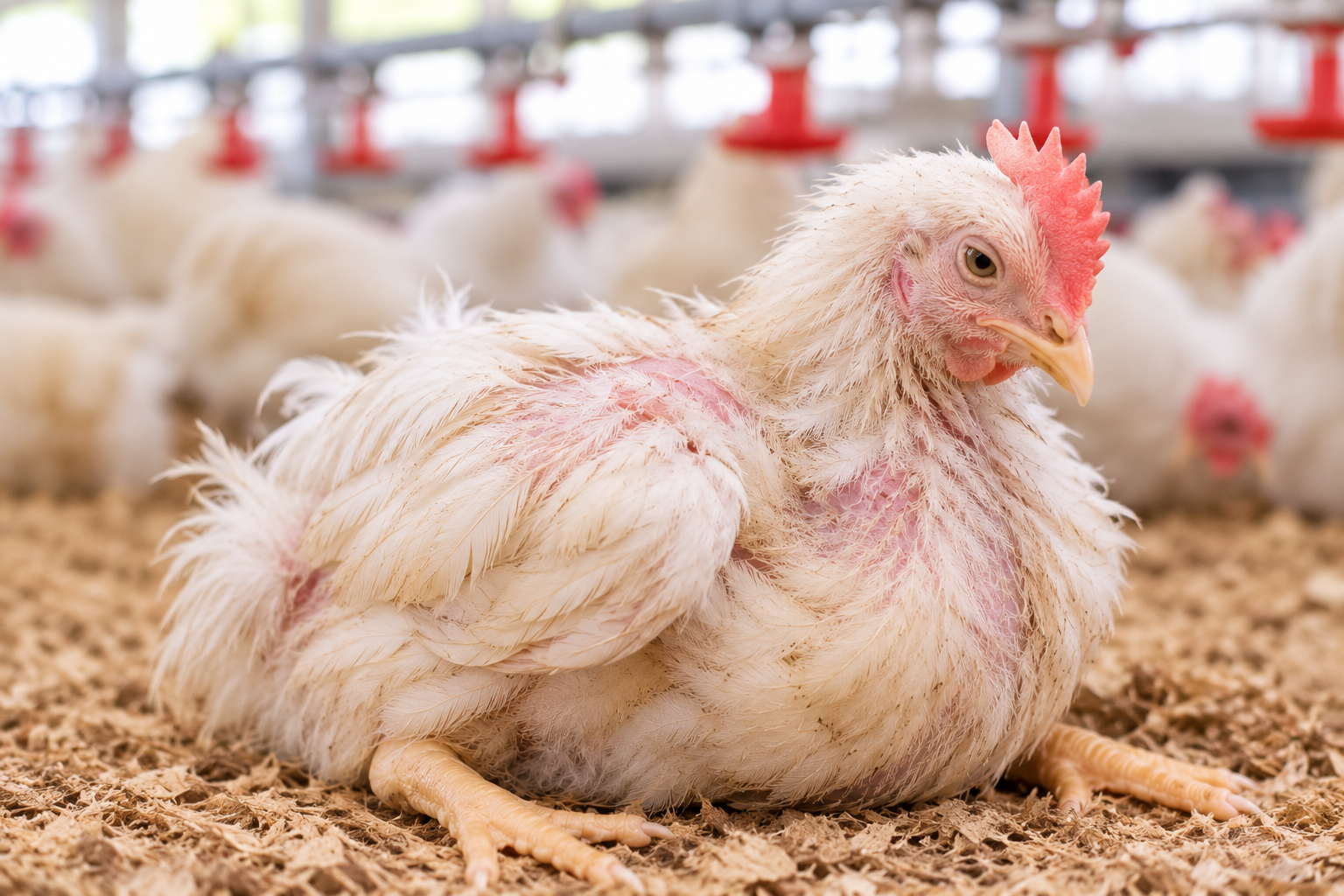
The success of a poultry vaccination program depends not only on vaccine selection and proper vaccination schedules but also on the overall condition of the bird's immune system. One of the factors that can interfere with optimal protection is immunosuppression.
Immunosuppression is a condition in which the function of the immune system is reduced, limiting the bird's ability to fight infections and develop an adequate immune response following vaccination. This condition can increase susceptibility to diseases and secondary infections, ultimately affecting flock health and production performance.
1. The Impact of Immunosuppression on Poultry
A weakened immune system can increase morbidity and mortality rates. In addition, affected birds may experience impaired growth, reduced production efficiency, and increased costs associated with treatment and disease control.
Immunosuppression can also affect three major components of the immune system: humoral immunity (antibody production), cell-mediated immunity (involving T lymphocytes), and innate immunity (the body's first line of defense). Impairment of one or more of these components can reduce the bird's ability to defend itself against infectious agents.
2. Factors Contributing to Immunosuppression
Immunosuppression in poultry can result from various infectious and non-infectious factors, including:
Viral infections: Such as Infectious Bursal Disease Virus (IBDV), Chicken Infectious Anemia Virus (CIAV), and Marek's Disease Virus (MDV), which can target immune organs or cells.
Mycotoxins: Including aflatoxins, fumonisins, trichothecenes, and ochratoxins, which can interfere with immune cell function.
Parasitic infections: Such as Eimeria spp. dan Cryptosporidium bailey, which can cause tissue damage and compromise the overall health of birds.
Environmental factors: High stocking density, heat stress, poor ventilation, and inadequate housing conditions.
Feed quality: Nutritional deficiencies or imbalances can interfere with the development and function of immune cells.
3. Major Immunosuppressive Viruses and Their Target Organs
Several viruses can impair the poultry immune system by damaging lymphoid organs and immune cells.
Infectious Bursal Disease Virus (IBDV) primarily targets the bursa of Fabricius, an important organ for B-lymphocyte development. Damage to this organ can impair humoral immune responses.
Chicken Infectious Anemia Virus (CIAV) targets hematopoietic precursor cells in the bone marrow and lymphoid cells, particularly T lymphocytes in the thymus. Infection can cause anemia and impair immune system development.
Marek's Disease Virus (MDV) can affect lymphoid tissues, including the thymus and bursa of Fabricius, as well as other tissues. Infection may cause immune dysfunction and, in certain cases, tumor or lymphoma formation.
Avian Reovirus is primarily associated with joint and tendon disorders (tenosynovitis). Certain infections may also be associated with immune system disturbances.
Avian Leukosis Virus (ALV) and Reticuloendotheliosis Virus (REV) can infect lymphoid tissues and hematopoietic cells, potentially causing tumor formation and impaired immune function.
4. How Does Immunosuppression Damage the Immune System?
Immunosuppressive agents can damage lymphoid cells and tissues involved in immune cell development and maturation. Several mechanisms may occur, including lymphoid cell damage, atrophy of lymphoid organs such as the bursa of Fabricius and thymus, and impaired lymphocyte proliferation and differentiation.
Alterations in immune regulation and cytokine production can also disrupt communication within the immune system. Consequently, the ability to develop humoral and cell-mediated immune responses may decline, increasing susceptibility to secondary infections.
One observable change during post-mortem examination is bursal atrophy, a condition characterized by a reduced bursa of Fabricius size compared with normal conditions. This finding may indicate lymphoid organ impairment, although further investigation is required to determine the underlying cause.
5. Immunosuppression and Vaccination Success
An impaired immune system can interfere with the development of immune responses following vaccination, including both antibody production (humoral immunity) and cell-mediated immunity. As a result, the level of protection achieved may be suboptimal.
However, low antibody titers do not necessarily indicate immunosuppression. Serological results should be interpreted by considering several factors, including vaccination history, bird age, maternal antibody levels, vaccine type, sampling time, and overall flock health.
Therefore, vaccination success should not be evaluated solely based on a single antibody titer result. A comprehensive assessment of the flock's overall condition is necessary to obtain a more accurate interpretation.
6. Field Evaluation of Immunosuppression
Identifying immunosuppression requires a comprehensive approach involving several evaluation steps:
Flock history evaluation: Including bird age, strain, disease history, vaccination program, and production performance.
Environmental and feed assessment: Including stocking density, ventilation, temperature, housing conditions, and potential mycotoxin contamination.
Clinical examination and necropsy: To identify clinical signs and pathological changes in lymphoid organs, particularly the bursa of Fabricius, thymus, and bone marrow.
Laboratory testing: Including serology to evaluate antibody responses, PCR to detect genetic material from infectious agents, and histopathology to identify tissue abnormalities.
These findings should be interpreted together with flock history and field observations to help identify the factors contributing to immune dysfunction.
Immunosuppression remains an important challenge in poultry health management because it can increase susceptibility to infectious diseases and interfere with vaccination success. It may be triggered by viral infections, mycotoxins, parasites, as well as environmental and management-related factors.
Controlling immunosuppression requires an integrated approach, including proper biosecurity practices, infectious disease control, feed quality management, improved housing conditions, and regular flock health monitoring.
Vaccination success is not determined solely by the vaccine administered, but also by the readiness of the bird's immune system to develop protection. By identifying and managing factors contributing
Reference:
Schat, K. A., & Skinner, M. A. (2014). Avian Immunosuppressive Diseases and Immunoevasion. Avian Immunology.